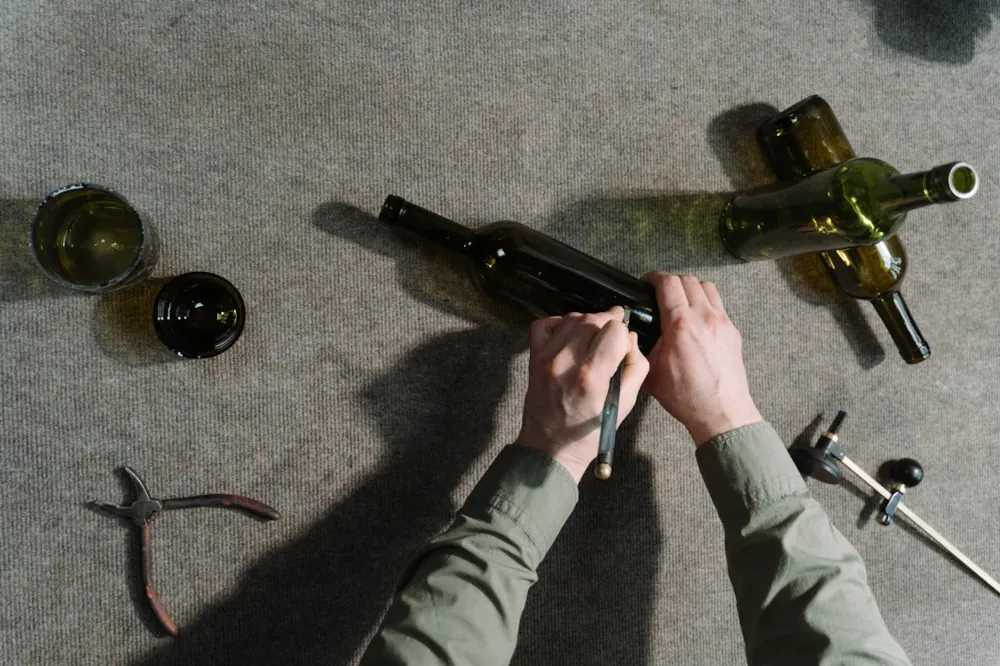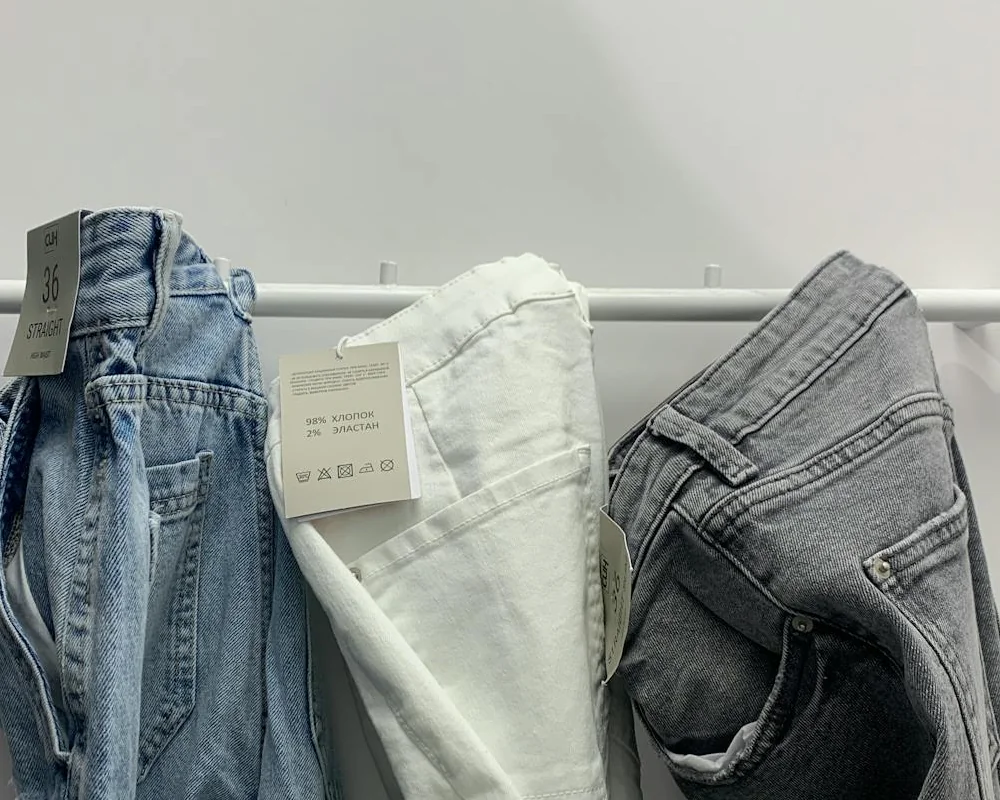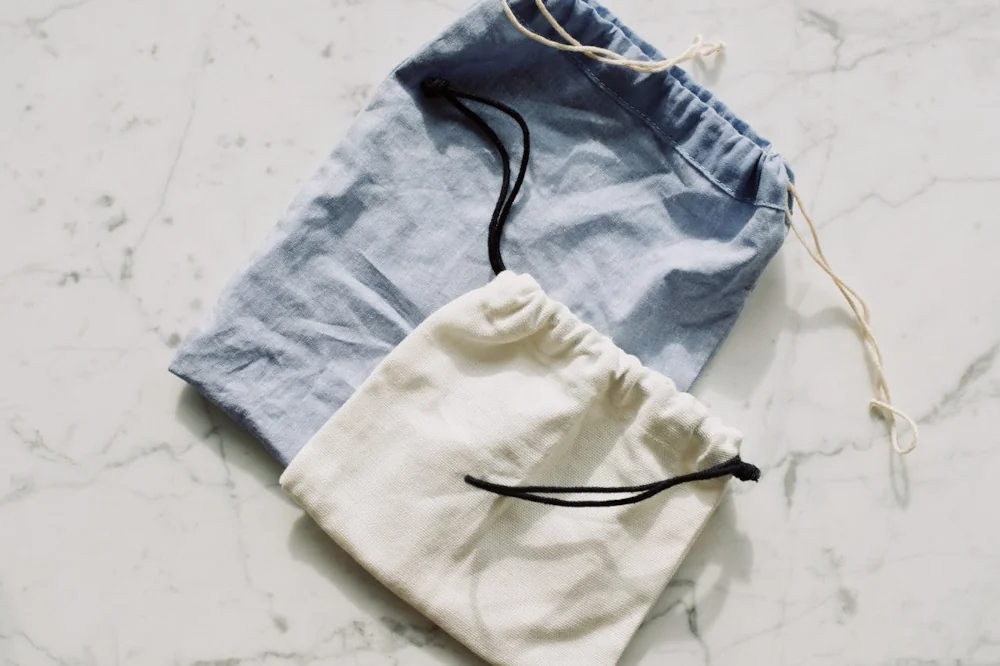
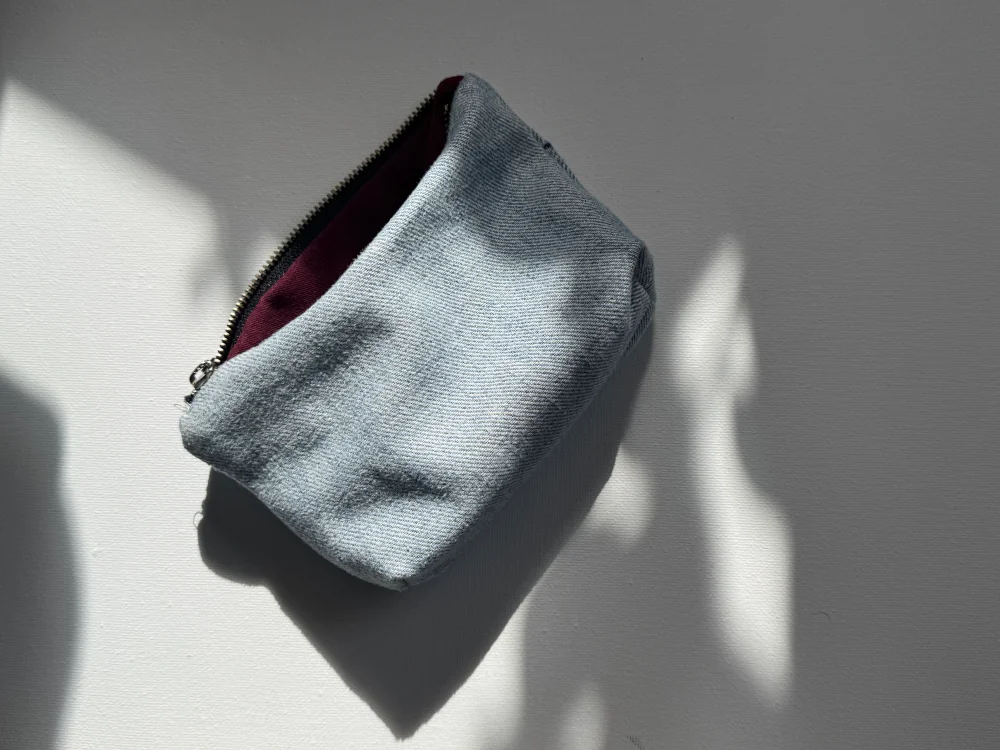
In this guide, we explore how an upcycled denim wallet is the perfect project for reclaiming old fabric and reducing waste. We all have that pair of jeans: the ones with the perfect wash, the comfortable fit, but perhaps a worn-out knee or a frayed hem. For many, they are destined for the donation pile or worse, the bin. But for us, that old denim isn’t just fabric, it’s a sturdy, versatile canvas brimming with design potential.
Denim is, famously, one of the most resource-intensive fabrics to produce. As we discussed in “The Ultimate Upcycling Project” blog, a single pair of jeans can consume around 2,000 gallons of water during its creation. This alone makes upcycling jeans a powerful statement against textile waste. By choosing to transform rather than discard, you’re not just saving resources; you’re actively participating in the circular economy, turning a used item into a valuable upcycling product with a new lease on life.
This project is perfect for fashion and textile students looking to reduce the amount of scrap pieces they have or for sewing beginners eager to try their hand at practical skills without investing in new, expensive materials. It’s approachable, satisfying, and results in a genuinely useful item: an upcycled denim wallet. However, before you start sewing, make sure you’ve mastered the Beginner Sewing Guide to ensure your seams are professional and secure.”
Why Upcycle Denim? Beyond the Obvious Benefits
Beyond the incredible water savings, denim offers unique advantages for upcycling:
- Durability: Denim is built to last, making it ideal for items that see daily wear, like a wallet.
- Texture & Character: The natural fading and wear patterns of old jeans add a unique, pre-loved aesthetic that new fabric can’t replicate.
- Built-in Features: Pockets, belt loops, and seams from the original garment can be creatively incorporated into your new design, saving you time and adding visual interest.
Ready to transform those trusty old jeans? Let’s turn a section of them into a functional and fashionable upcycled denim wallet.
Design Sustainably. Sew Professionally.
Gather Your Supplies For The Project
Designing Your Upcycled Denim Wallet: The Essentials. Click on the item and buy it right away for your project.
You don’t need a full studio for this upcycling project. Here is the list of supplies you will need for this project:
- Old Jeans: One pair of old jeans.
- Fabric Scissors: Sharp scissors for cutting denim.
- Ruler or Measuring Tape: For accurate measurements.
- Fabric Chalk or Pen: For marking your cutting lines.
- Sewing Machine: A machine makes it quicker, but hand-stitching is entirely possible as well.
- Denim needle: A size 90/14 or 100/16 needle is essential for your sewing machine to pierce through thick layers without breaking.
- Sewing thread: A high-quality all-purpose polyester sewing thread (match color to your fabrics).
- Zipper: One 15cm zipper (match to your denim color or choose a contrasting pop).
- Lining Fabric: A small piece of fabric. You can also use scraps, old bedding or a shirt that you don’t wear anymore.
- Accessories (optional): D-rings, keychains or patches to personalize your wallet.
- Iron: For crisp seams.
- Pins or Fabric Clips: To hold pieces together.
Project Guide: Step-by-Step Instructions for Denim Pouch Wallet
Follow these simple steps to create your custom denim pouch wallet. Remember, precision is your friend, but don’t be afraid to add your personal flair!
Step 1: Prepare Your Denim
- Iron: Start by ironing your jeans to ensure the fabric is flat and easy to measure.
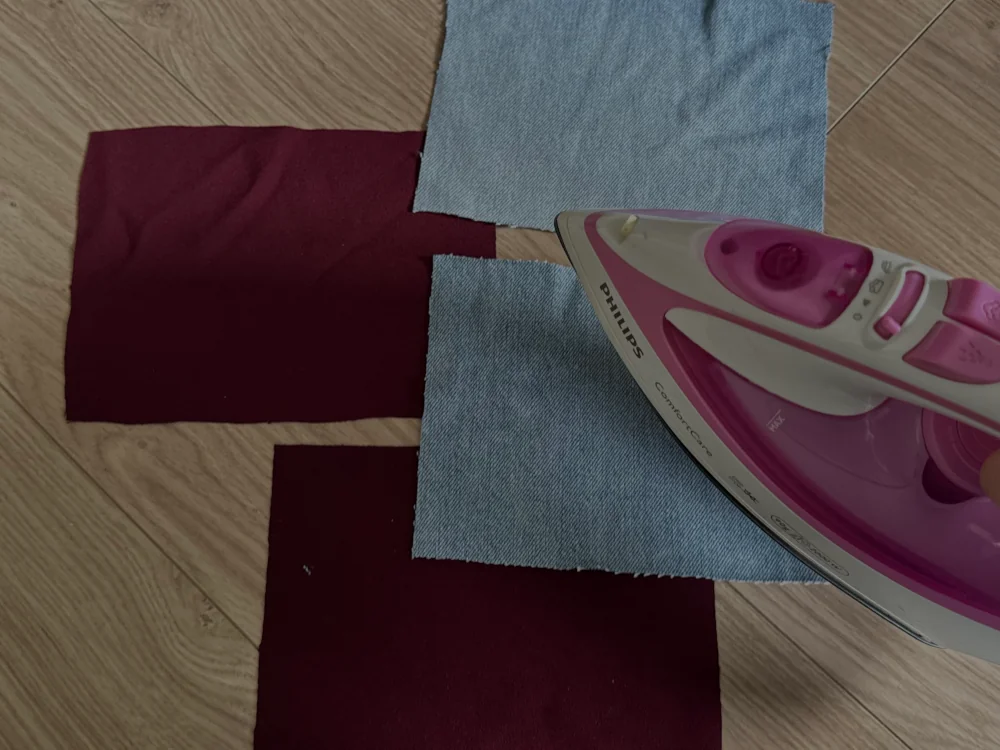
- Cut Wallet Pieces: From this flat denim, cut two rectangular pieces, each measuring 19cm wide by 14cm high. These will be the main body of your pouch.
Pro Tip: You can use a section of the jeans with interesting texture or fading for character! If your jeans have a back pocket, you could even cut one of your main pieces to incorporate it.
Step 2: Prepare Your Zipper & Lining
- Trim Zipper: If your zipper is longer than 15cm, trim the excess at one end, leaving about a centimeter of fabric beyond the metal stopper.
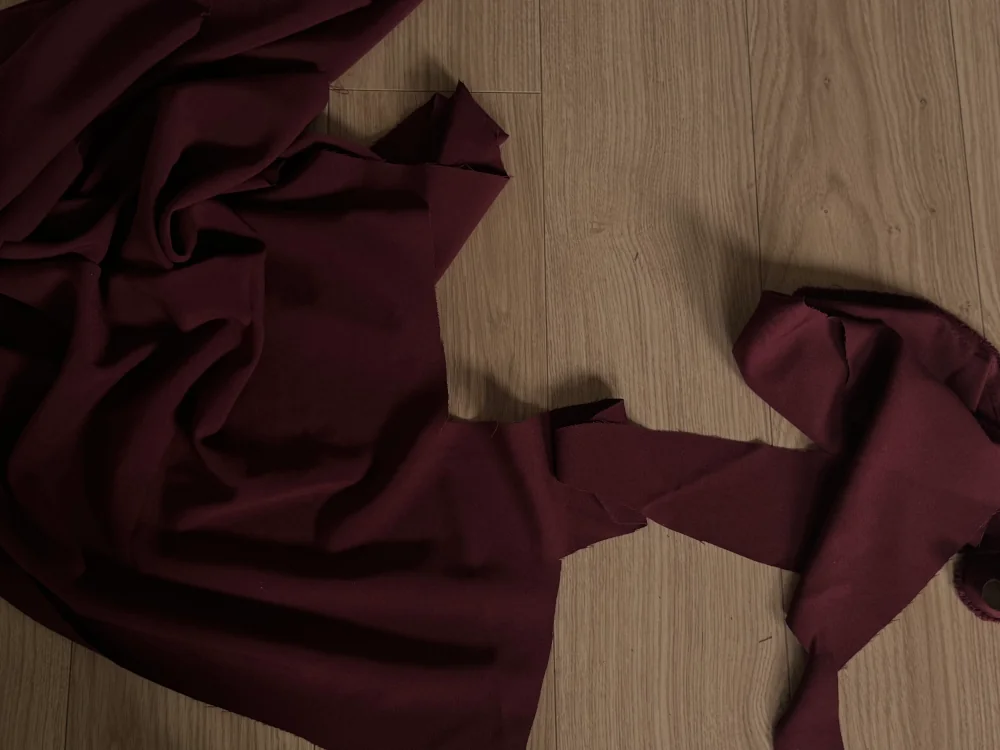
- Cut Lining: Cut two pieces of lining fabric, each 19cm wide by 14cm high — the same size as your denim pieces.
- Iron: Iron again all your cut fabric.
Pro Tip for Beginners: If you are new to sewing, choose a lining fabric where both sides look identical. This eliminates the risk of accidentally sewing the “wrong side” of the fabric facing out.

Step 3: Integrate the Zipper and Lining
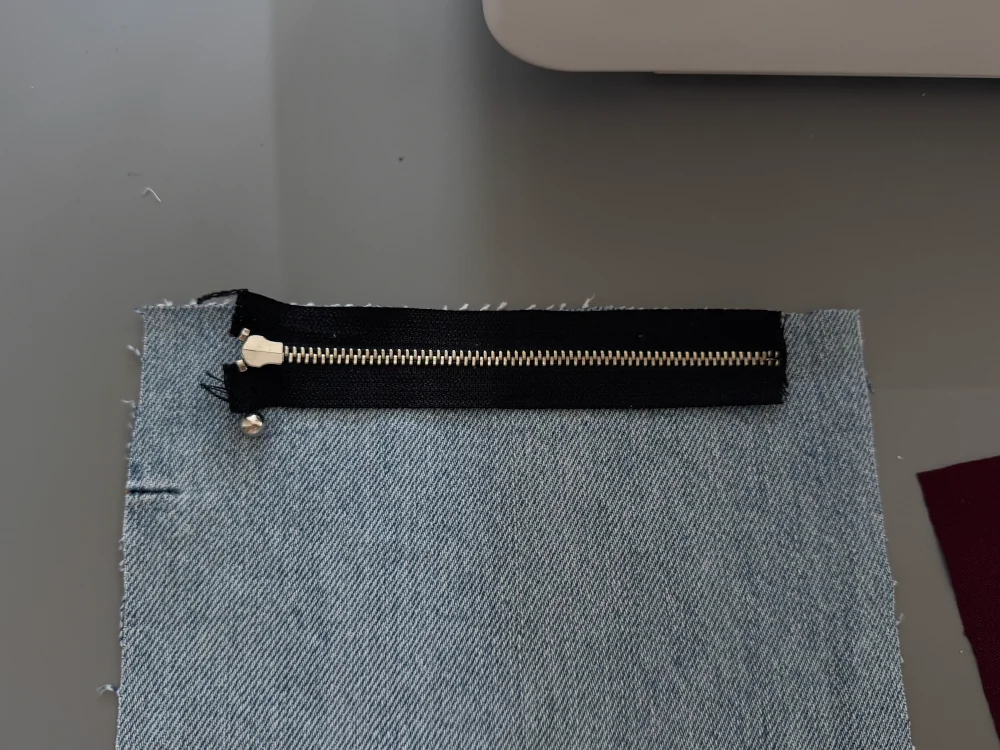
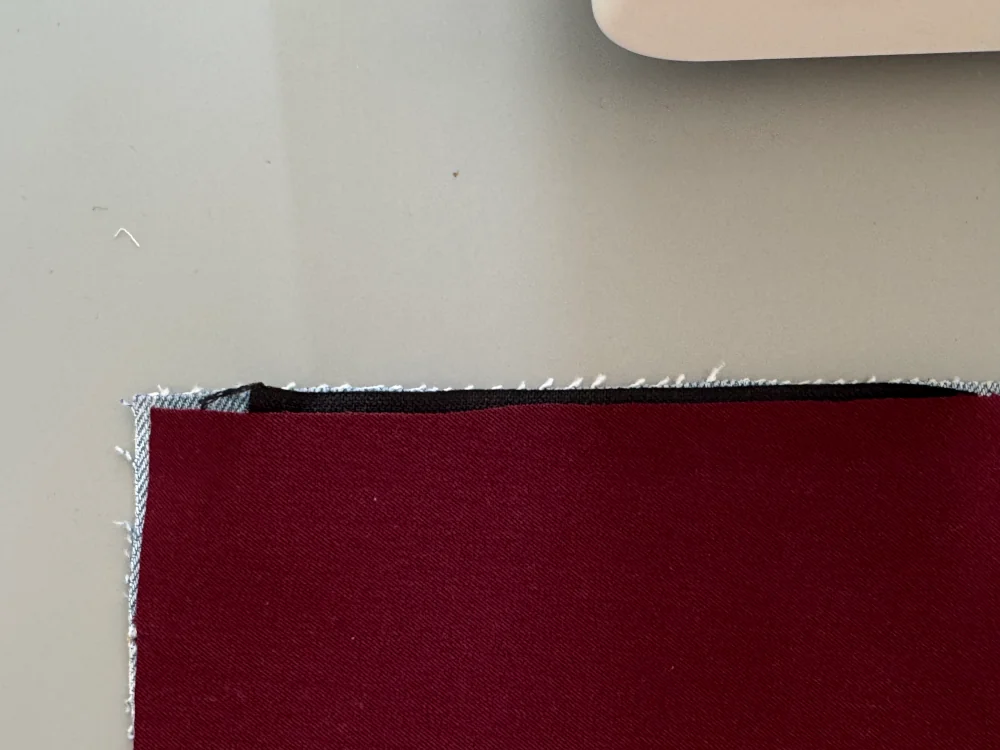
- The Sandwich: Place denim piece right side up. Lay the zipper on top, right side down. Place the lining piece right side down on top. Align the top 19cm edges.
- Stitch: Pin and sew along the top edge using your denim needle. Flip the fabrics back and press.
- Repeat: Do the same for the other side of the zipper with the remaining pieces. Press both sides flat.

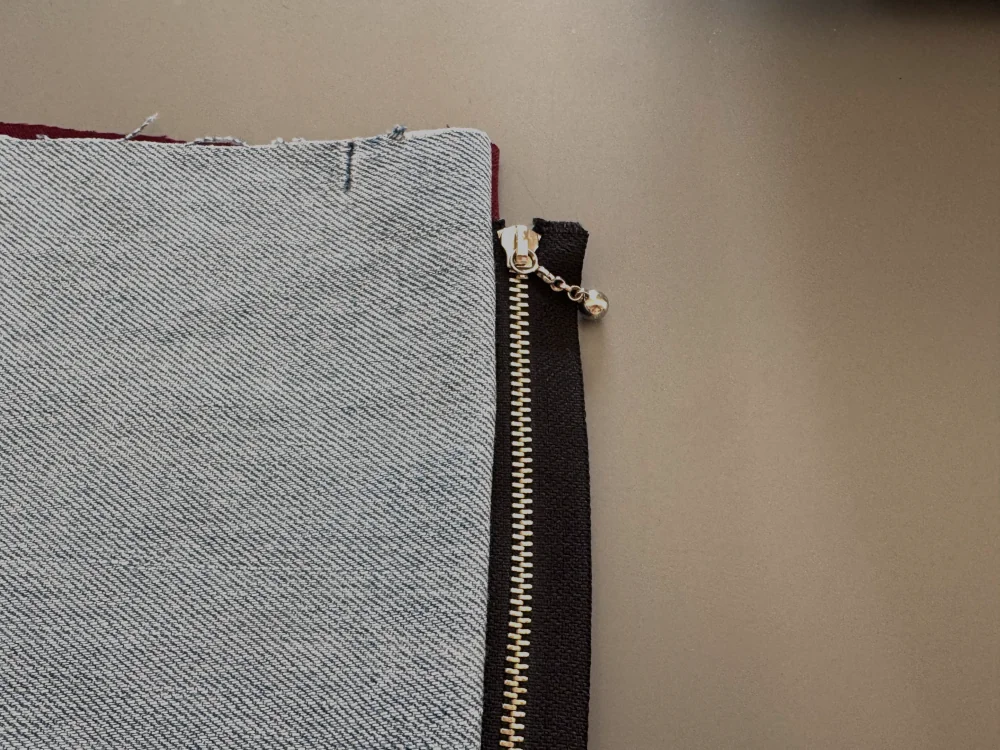
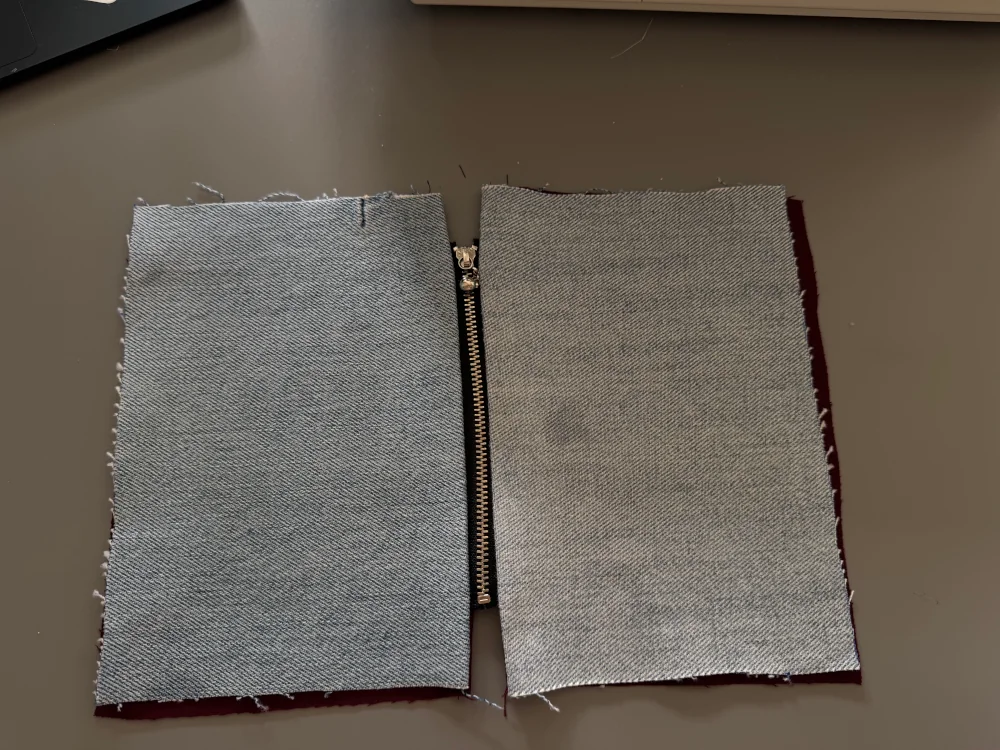
Step 4: Assemble and Structure the Body
- Open Zipper: Slide your zipper tab halfway open so you can turn the pouch later.
- Align & Sew Sides: Pull both denim pieces right sides together and both lining pieces right sides together. Align all the corners and seams, pin them.
- Opening: Mark and leave an 8cm opening at the bottom of the lining.
- Sew: Sew all around the fabric, just leave the 8cm gap.
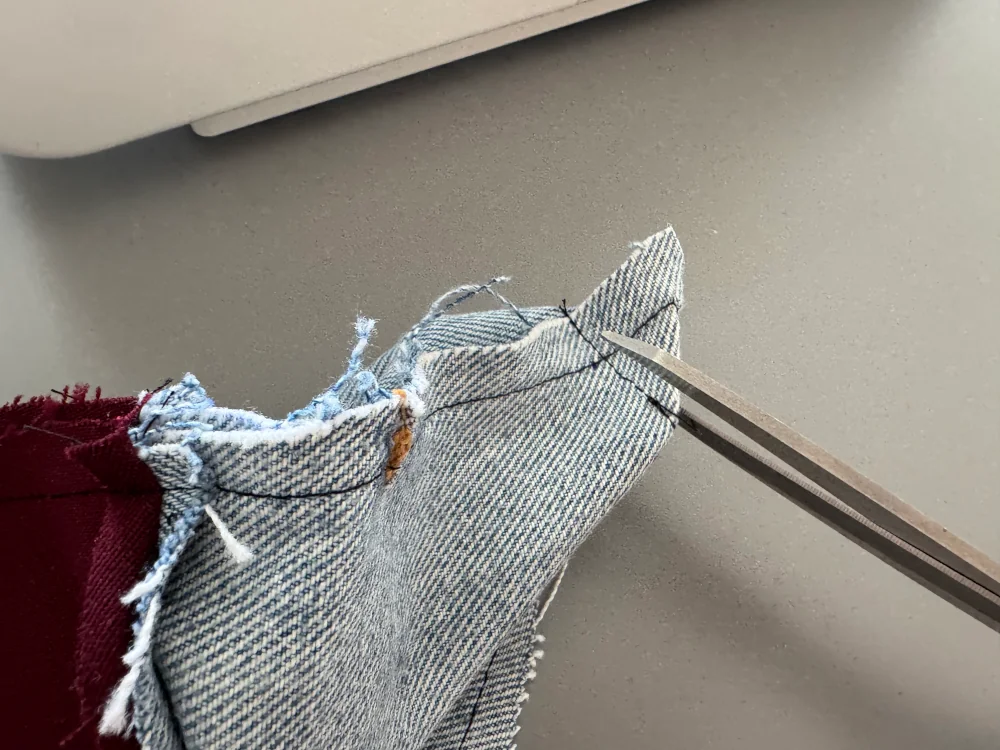
- Mark the Corners: At each of the 2 corners of the denim and two corners of the lining, use your chalk to mark a small square (2cm x 2cm) measured from the seam line, not the fabric edge.
- Sew the Boxed Corners: Pull the fabric of one corner notch apart and flatten it so the side seam matches up with the bottom seam. This creates a straight line across the corner. Pin and sew across this line.
- Trim: Cut away any excess fabric to reduce bulk. Repeat this for all four corners.
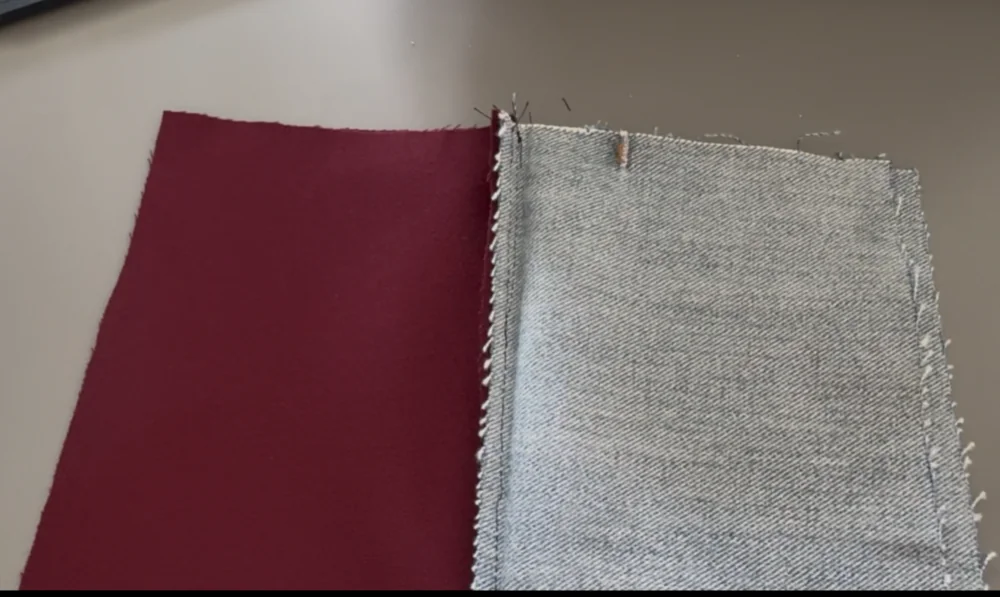


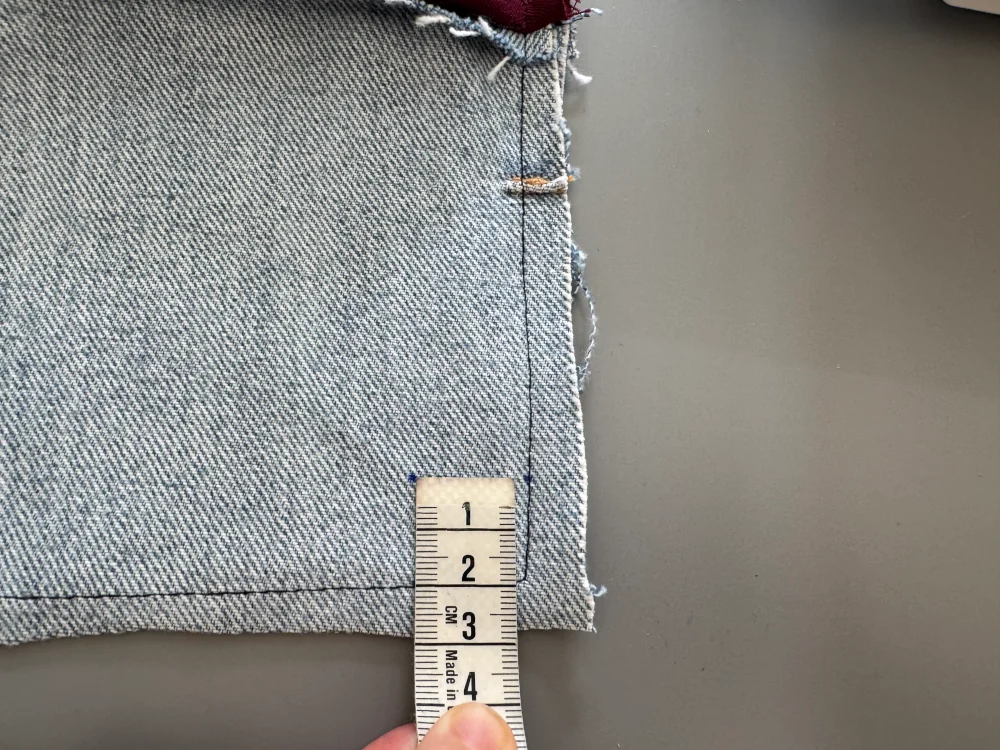
Step 5: Professional Finishing
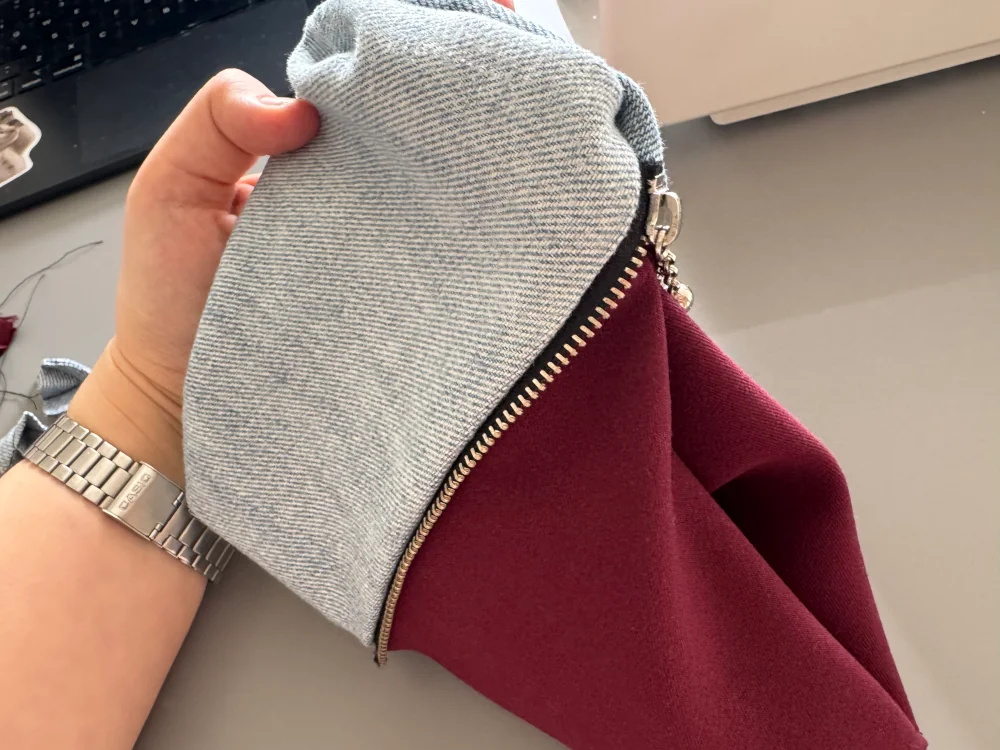
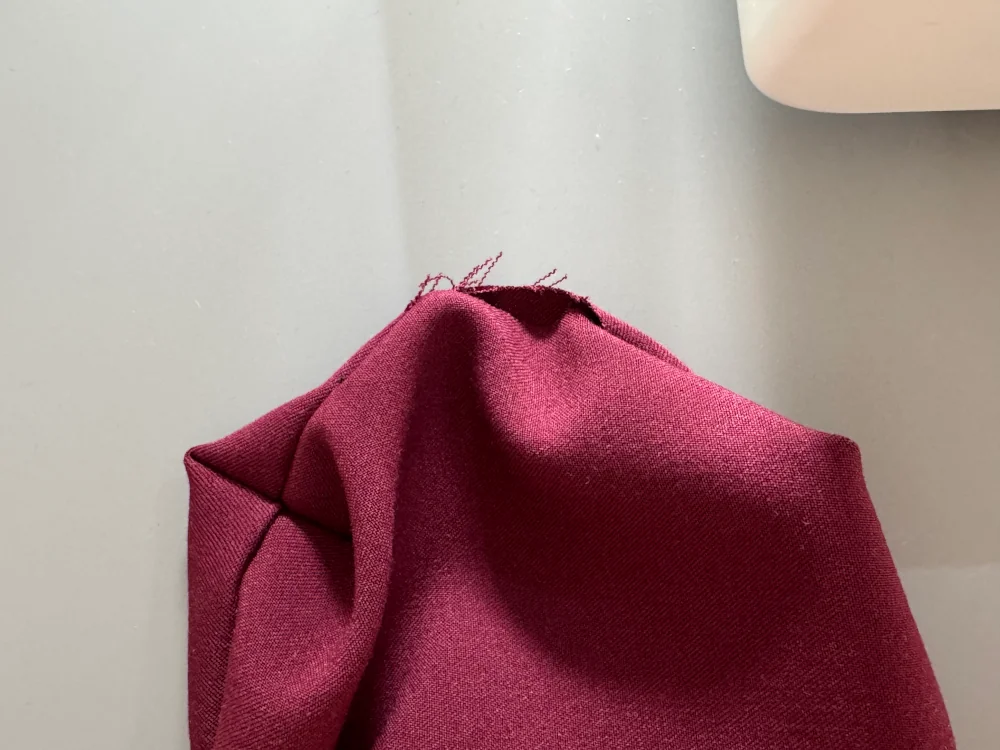
- The Reveal: Reach through the gap in the lining and pull the denim exterior through until the pouch is right side out.
- Close the Gap: Stitch the opening in the lining closed with a neat ladder stitch or a close machine stitch.
- Final Press: Tuck the lining into the denim. Because you boxed the corners, your upcycled denim wallet will now stand up on its own or have a wider, professional base. Give it a final steam press.
Your New Statement Piece
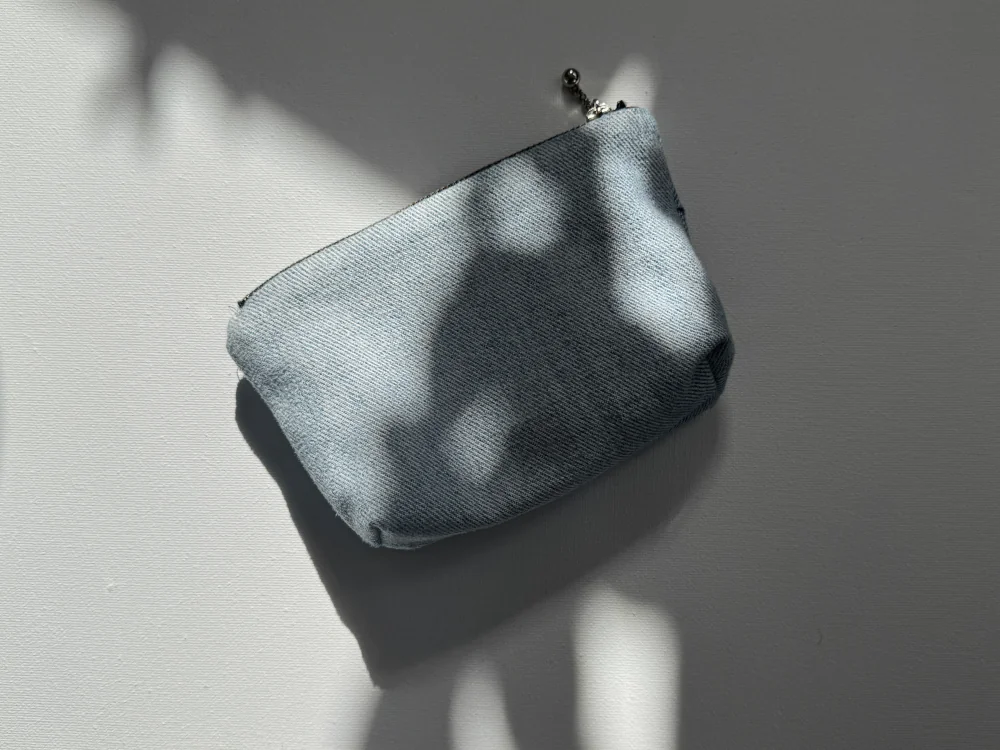
And there you have it! A unique, durable, and incredibly personal upcycled denim wallet, born from an old pair of jeans. This upcycling project not only saves precious resources but also showcases your creativity and practical sewing skills. It’s a tangible example of how a small act of creative reuse can make a big difference, transforming waste into something that you can use every day! Once you finish your first upcycled denim wallet, you’ll likely start looking at every old pair of jeans as a new design opportunity!
Frequently Asked Questions:
My sewing machine is skipping stitches on the denim. What’s wrong?
This usually happens when the needle is too dull or too thin. Ensure you are using a dedicated denim needle (90/14). If it still skips, try sewing more slowly over the thickest seams.
Can I use stretchy denim for this project?
You can, but it is much trickier for beginners. Stretch denim tends to warp when you sew zippers. For your first upcycling project, a 100% cotton denim is much easier to handle.
What should I do if my zipper is too short for the 19cm opening?
If your zipper is shorter than 15cm, you can add “zipper tabs.” Sew small squares of denim to each end of the zipper to extend its length. This is a common technique to make found hardware fit custom patterns perfectly.